

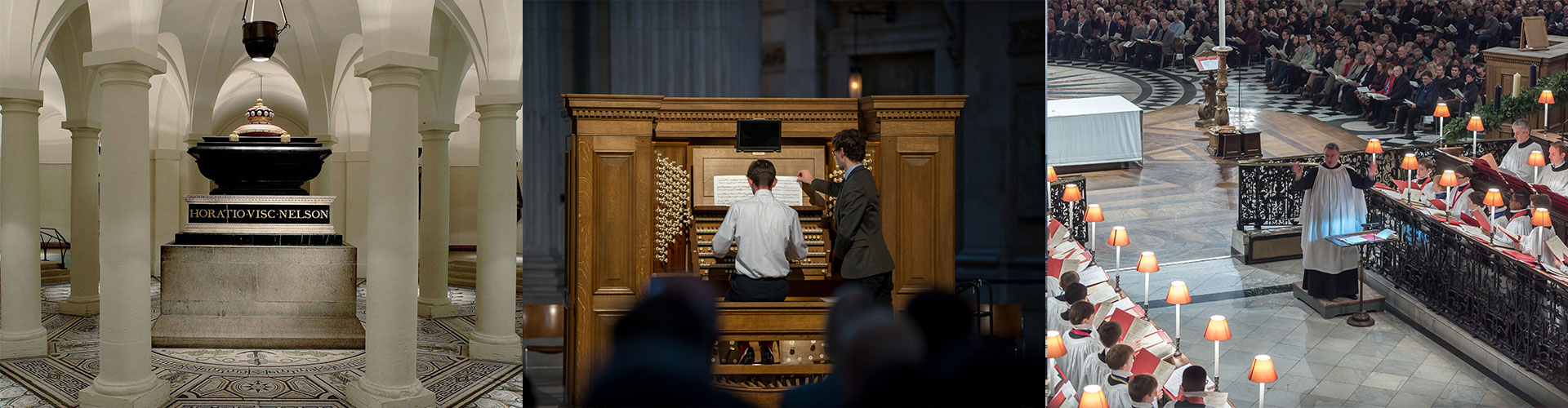
Location: St Paul’s Cathedral.
Responsible To: The Chapter.
Overriding Duty: Governance of the Cathedral.
Background
In 2023 St Paul’s Cathedral refreshed its governance structures and became a registered charity in line with the Cathedrals Measure (2021). One of the significant changes was the appointment of a Senior Non-Executive member of the Chapter (the trustee body). The current post-holder will complete their maximum length of service on Chapter in November 2027, and St Paul’s, in collaboration with the Bishop of London, are now searching for a new Senior Non-Executive to join the board.
The Role of the Senior Non-Executive Member
The Senior Non-Executive Member (SNEM) is the Chapter member appointed by the Bishop in consultation with the Chapter.
The role of the Senior Non-Executive Member, as the senior Chapter member without any executive functions or duties, is a purely governance role. The SNEM does not represent the Bishop on Chapter, but provides a link between the Bishop and the governance of the Cathedral.
Building a strong and transparent relationship with the Dean is vital to its effectiveness, as is the Senior Non-Executive Member’s relationship with the wider Chapter. In the context of these good relationships, the Senior Non-Executive Member will need to retain a clear independence to enable appropriate challenge to both the Dean and other members of Chapter.
The Cathedrals Measure (2021) supports periodic meetings between the SNEM and Dean, through which the role of the SNEM enables the accountability of the Dean to Chapter. In pursuit of this, national guidance recommends that:
- The Dean and Senior Non-Executive Member meet at least twice a year.
- The Senior Non-Executive Member is expected to be a critical friend to the Dean, and to provide support and advice to the Dean in the Dean’s capacity as Chair of the Chapter.
- The Bishop, Dean and Senior Non-Executive Member meet one or two times a year (in addition to the Dean’s usual meetings with the Bishop) to discuss any specific matters of concern or interest, as well as the mission of the Cathedral and its wider role in the diocese more generally.
- The Senior Non-Executive Member will chair Chapter meetings in the Dean’s temporary absence (which may include a conflict of interest causing the Dean to withdraw for a particular item).
The Senior Non-Executive Member should play a leading role in setting objectives for the Dean and undertaking an annual review and objective setting, after consultation with other Chapter members. The Bishop will continue to oversee the Dean’s Ministerial Development Review.
The Senior Non-Executive Member will play an important role in enabling good communication between different parties, including the Dean, Bishop and members of Chapter.
In addition to the roles and duties of a non-executive member of the Chapter, the Senior Non-Executive Member will:
- Develop an ongoing working relationship with the Bishop and define appropriate links between the Bishop and the governance of the Cathedral, promoting the Cathedral’s core function as the seat of the Bishop.
- Help to manage risks in a proportionate and balanced way.
- Chair one of the Chapter’s statutory committees (the current SNEM Chairs the Finance Committee).
- Attend major services and events at the Cathedral or act as a representative of the Cathedral on occasion.
- Build relationships with non-executives on the board.
- Ensure that the values of St Paul’s Cathedral, the principles of good governance, diversity, inclusion, are upheld in the delivery of Chapter’s objectives.
- Engage with the national network of Cathedral Senior Non-Executive Members.
Role description for all Non-Executive Members of Chapter
Responsibilities of Chapter
Chapter comprises members who are lay and ordained, executive and non-executive as set out in the Cathedral’s Constitution. All Chapter Members have collective responsibility for the organisation which includes:
- ensuring the Cathedral is carrying out its purposes for the public benefit;
- complying with the Cathedral’s governance document and the law;
- acting in the best interests of St Paul’s;
- managing resources responsibly;
- acting with reasonable care and skill;
- ensuring St Paul’s is accountable.
All members of Chapter are therefore expected to provide constructive challenge, input and support to the Cathedral’s strategic direction and operational implementation. All members must take a full part in the discussions and decision-making of the Chapter as it fulfils its statutory responsibilities:
- to order the worship and promote the mission of the Cathedral;
- to formulate and decide on proposals in connection with the strategic direction and mission of the Cathedral;
- to manage all property vested in the Cathedral and the income accruing from it;
- to ensure that necessary repairs and maintenance of the Cathedral and its contents and other buildings and monuments are carried out;
- to attend to matters concerning the appointment of staff to the Cathedral;
- to prepare an annual report and accounts;
- to keep under review the Constitution and Statutes of the Cathedral;
- to ensure legal and regulatory compliance;
- to exercise the power if necessary to provide for the incorporation of limited companies for the better management of the Cathedral.
Contributing to the Cathedral’s life, worship and mission
In particular Non-Executive Membesr of Chapter shall contribute the skills and experience they bring to the Cathedral as opportunity allows, for example:
- by serving on such incorporated limited companies as the Chapter may establish, on committees of the Chapter and on any working groups of the Chapter as may be created;
- by attending and contributing to worship at the Cathedral;
- by contributing to the ministry of hospitality offered at the Cathedral and to such other Cathedral activity as may be appropriate.
In general:
- to support and act within the Cathedral’s values: Caring, Welcoming, Empowering, Creative and Trustworthy;
- to ensure their own compliance with the Chapter’s policies and procedures, and contribute to the review and development of policy and practice;
- to promote and uphold the Cathedral’s reputation and good standing at all times.
Commitment
Tenure
This is a three-year appointment in the first instance. A Chapter member may serve for a maximum of three, three-year tenures.
Meetings
Chapter meets five times per year, usually for three hours in the morning (currently a Wednesday), plus one 36-hour residential per year, normally held in June.
Papers are received in advance and all members of Chapter are expected to have read papers and be prepared to contribute as needed to discussion.
Expenses can be claimed for attendance at meetings or carrying out functions on behalf of Chapter.
Charity Commission
The Cathedral is registered with the Charity Commission, and Chapter members must be eligible to be trustees under the Charities Act. Chapter members may not act as a trustee if they are disqualified unless authorised to do so by a waiver from the Commission. The reasons for disqualification are shown in the disqualifying reasons table issued by the Commission but include:
- being bankrupt or having an individual voluntary arrangement (IVA);
- having an unspent conviction for certain offences (including any that involve dishonesty or deception);
- being on the Sex Offenders Register.